Georgia surprises people. Most visitors picture flat Southern terrain and endless pine forest. What they actually get is a state that stretches from craggy Appalachian ridgelines in the north to tidal marshes and barrier islands in the south — with dramatic canyons, ancient swamps, gold-bearing rivers, and some genuinely excellent city parks in between.
The spots below cover that full range. They’re grouped by region so you can build a logical itinerary, and drawn from a curated travel planning dataset built from on-the-ground research.
Jump to: North Georgia Mountains · Central & West Georgia · Augusta Area · City Nature Escapes · Coastal & Southern Georgia · Planning Notes
North Georgia Mountains
The Blue Ridge Mountains enter Georgia from the north, giving the state its most dramatic natural scenery. This region rewards waterfall hunters, hikers, and anyone who wants real elevation change.
Amicalola Falls State Park
Dawson County · Dawsonville · Parking fee · Trails free
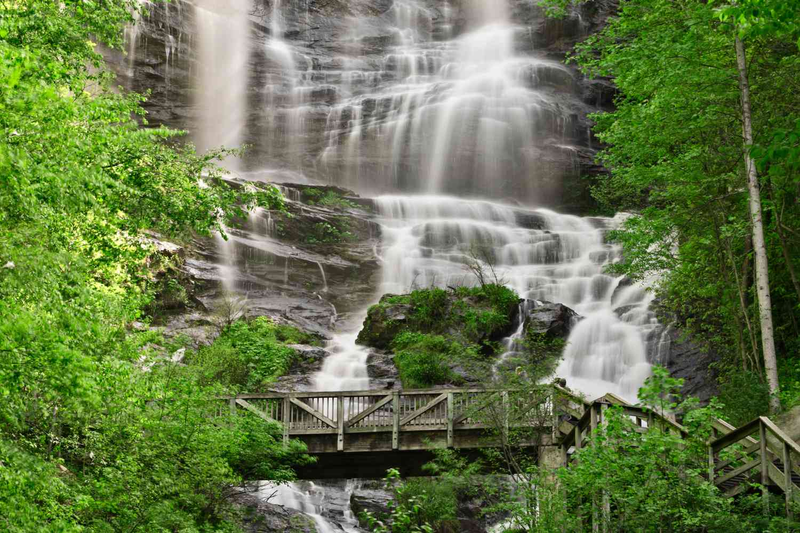
At 729 feet, Amicalola Falls is the tallest cascading waterfall east of the Mississippi. The name comes from the Cherokee word for “tumbling water,” which the falls earn — water thunders down a staircase of exposed granite across multiple drops, visible from a series of overlook bridges at different heights.
The park also serves as the approach trailhead for the Appalachian Trail. An 8-mile connector links Amicalola to Springer Mountain, the AT’s southern terminus. Even if you’re not through-hiking, the walk to the base of the falls is worth the effort — the close-up mist and sound are things photographs don’t convey.
Best time: late February through April for strong water volume; October for fall foliage.
Tallulah Gorge State Park
Rabun County · Tallulah Falls · Parking fee · Gorge floor permit required
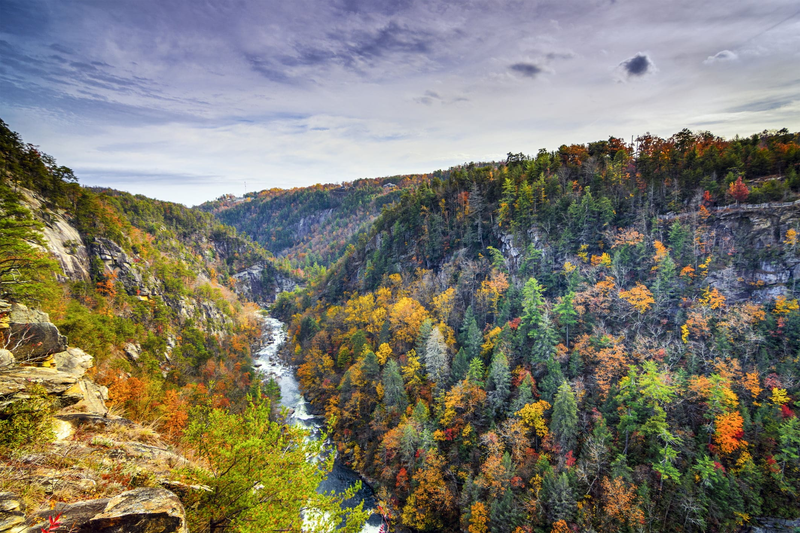
Tallulah Gorge cuts nearly 1,000 feet deep and 2 miles long through northeast Georgia — one of the most dramatic geological features in the eastern U.S. Six waterfalls cascade through the canyon, and the rim trail delivers views that stop most hikers in their tracks.
The gorge floor is accessible by permit, limited to 100 people per day, with a steep descent to a suspension bridge crossing the canyon. It’s worth it. The permit system keeps the place uncrowded — book in advance on weekends. The park beach and lake are family-friendly for those not up for the descent.
Cloudland Canyon State Park
Dade County · Trenton · Parking fee
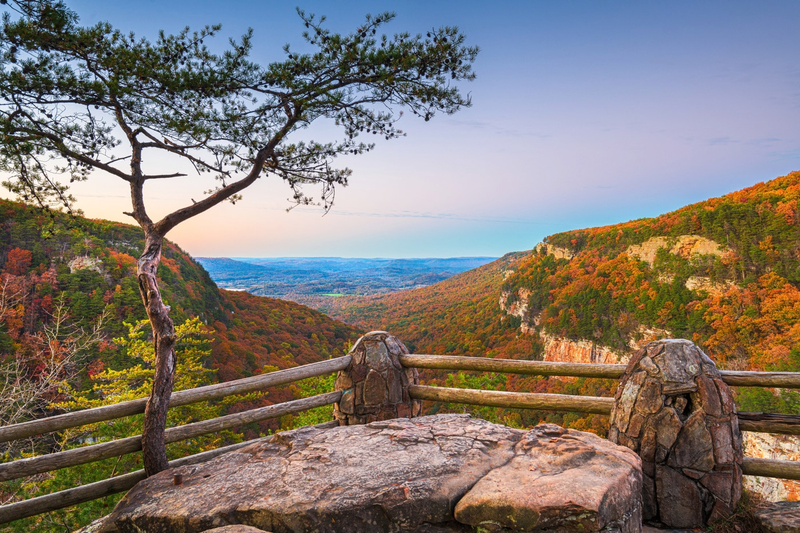
In the far northwest corner of Georgia, near the Tennessee border, Cloudland Canyon drops 1,000 feet into a sandstone gorge carved by Sitton Gulch Creek. Two waterfalls — Cherokee Falls (60 ft) and Hemlock Falls (90 ft) — sit at the canyon floor, reached by a steep staircase that most visitors find challenging but rewarding.
The rim trail is accessible and scenic without the descent. Cloudland has excellent camping — tent sites, platform sites, and yurts — making it a good base for a multi-day trip. Sunsets from the western rim are exceptional. Arrive early on weekends: the parking lot fills by 10am when the weather is good.
Panther Creek Trail and Falls
Habersham County · Clarkesville · Free
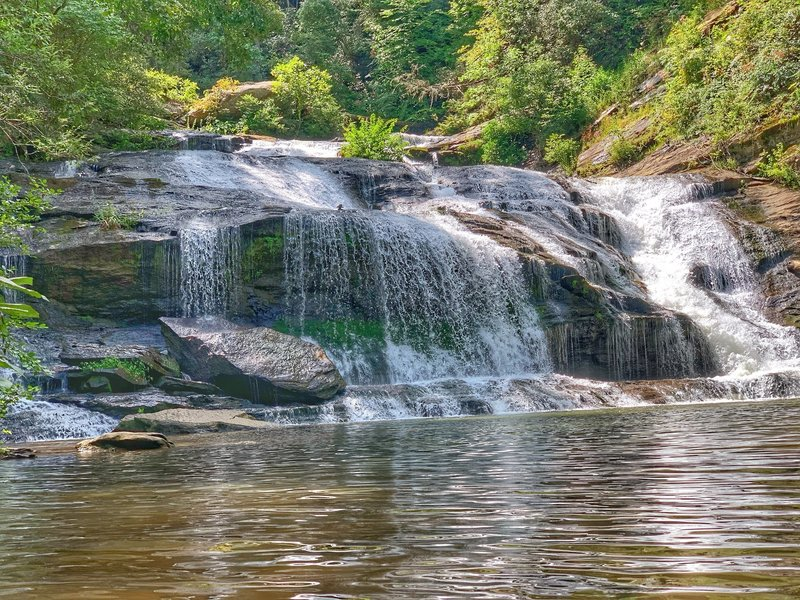
One of North Georgia’s most underrated hikes. The trail follows Panther Creek through a gorge lined with hemlocks and rhododendrons, crossing the creek multiple times before reaching a 70-foot waterfall with a large swimming hole at its base. Total distance is about 7 miles round-trip with 900 feet of elevation gain — moderate difficulty.
This spot rarely appears in Georgia travel roundups despite being genuinely beautiful. The falls are wide enough to swim under and the gorge stays cool even in summer. Trailhead is off US-441 north of Toccoa. No fee, no permit.
Lake Blue Ridge
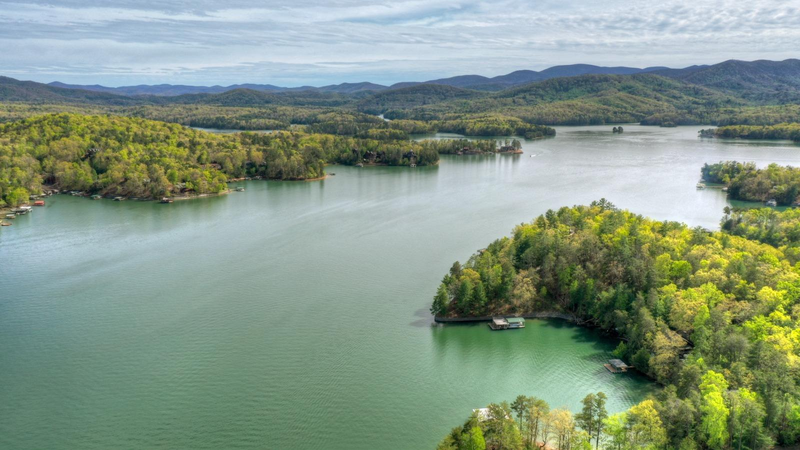
Fannin County · Blue Ridge · Free (marina and boat rental fees vary)
A 3,290-acre reservoir in the Blue Ridge Mountains, ringed by forested shoreline with very little commercial development. The water stays clear enough for good visibility — relatively rare for Georgia lakes. It’s popular for kayaking, fishing, and swimming.
The nearby town of Blue Ridge has become a legitimate weekend destination on its own: wineries, antique shops, and the Blue Ridge Scenic Railway depart from downtown. Boat rentals are available at the marina. Lake Blue Ridge is a good anchor for a longer Fannin County trip.
Chestatee River — Gold Panning & Tubing
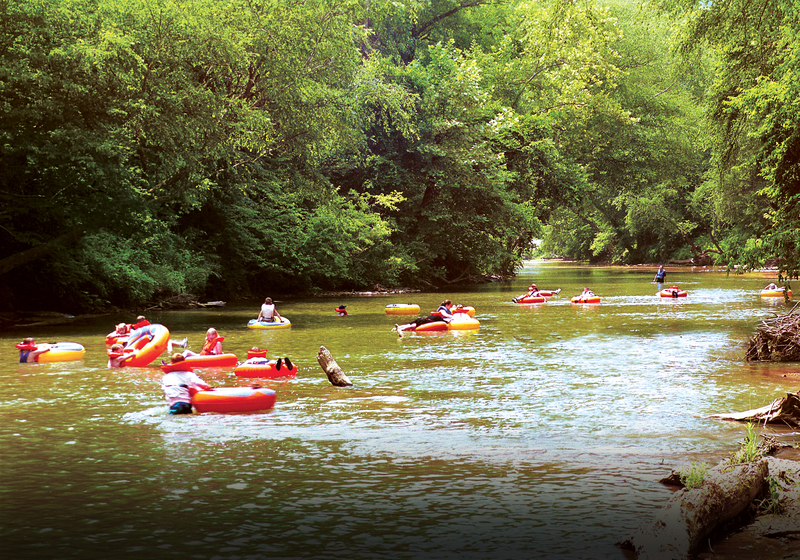
Lumpkin County · Dahlonega · Outfitter fees apply
Dahlonega was the site of America’s first major gold rush in 1828, and the Chestatee River still runs gold. Local outfitters rent equipment for panning and tube float trips. It’s a family activity that’s genuinely different from anything else in the state.
The surrounding Dahlonega area is worth a half-day: the historic square, the Gold Museum, and the wine trail (Dahlonega is a serious American Viticultural Area with a dozen wineries within 15 minutes of town). Combine with Amicalola Falls for a full North Georgia mountain day.
Central & West Georgia
Providence Canyon State Park
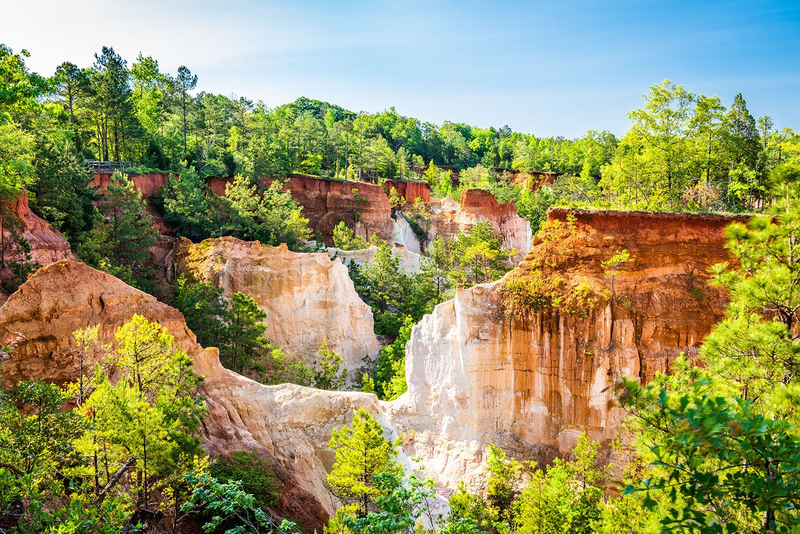
Stewart County · Lumpkin · Parking fee
Called “Georgia’s Little Grand Canyon,” Providence Canyon is a product of 19th-century poor farming practices — soil erosion carved a network of canyons up to 150 feet deep. What started as an agricultural disaster became one of the state’s strangest and most photogenic landscapes.
The canyon walls display 43 shades of clay — pink, purple, orange, red — that intensify in different light conditions. A 7-mile loop trail descends to the canyon floor where you can walk among the towering walls. Most dramatic in early morning. Located an hour south of Columbus, Providence Canyon is often skipped because it’s not en route to anything — which is also what makes it special.
Callaway Resort & Gardens
Harris County · Pine Mountain · Paid admission
A 2,500-acre resort property centered on manicured gardens, lakes, and walking trails. The azalea collection — 700 varieties, 20,000 plants — is one of the largest in the world, peaking mid-March through early April. There’s also a butterfly center, vegetable garden, and lakefront beach with swimming and paddleboats.
Callaway sits midway between Atlanta and Columbus, making it a logical stop on a west Georgia itinerary. It’s more resort than wilderness, but the grounds are genuinely beautiful and the birding during migration is excellent. The annual Fantasy in Lights winter show (November–January) is one of the better holiday light events in the South.
Chattahoochee RiverWalk
Muscogee County · Columbus · Free
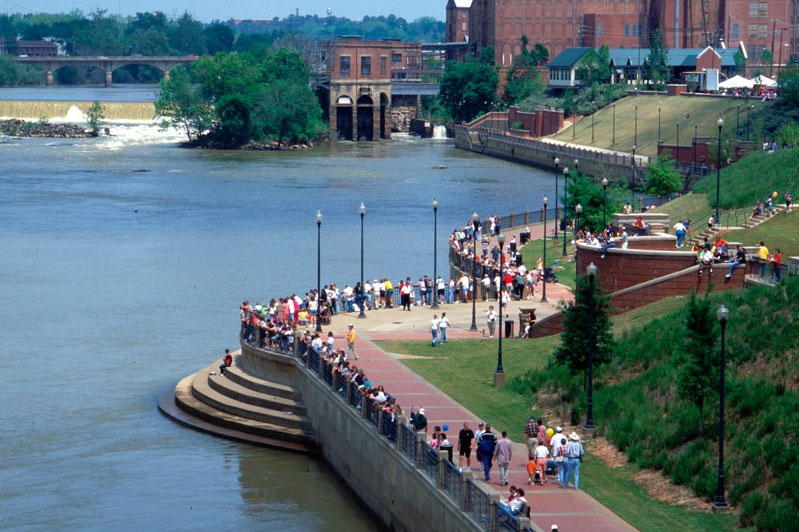
A 22-mile linear park tracing the Chattahoochee River through downtown Columbus. The riverwalk connects to Whitewater Columbus — the world’s longest urban whitewater course, where commercial rafting and kayak operations run most of the year.
The trail is free, paved, and accessible. Columbus has built its downtown genuinely around the river rather than walling it off, and the result is one of the better urban riverfronts in Georgia. The whitewater section alone is worth the drive for paddlers.
Augusta Area
Augusta Canal National Heritage Area
Richmond County · Augusta · Trail free · Heritage Center paid admission
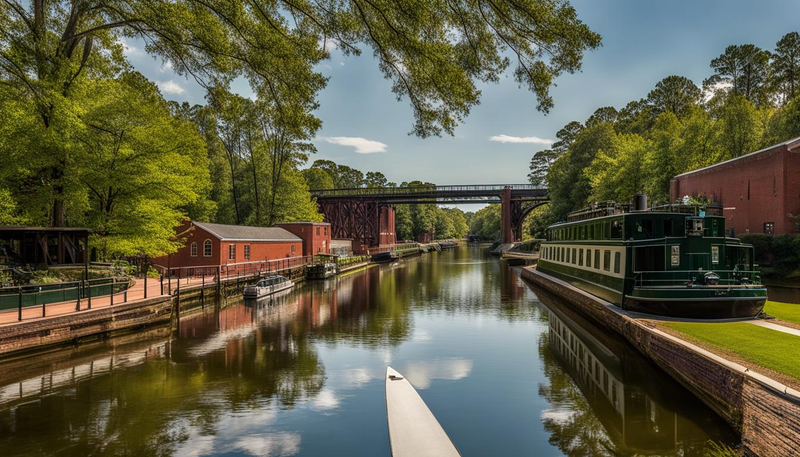
Built in 1845, the Augusta Canal is one of the only antebellum canals still in commercial use in the United States. A 7-mile towpath runs its full length, popular with walkers, cyclists, and kayakers. The canal itself is paddle-able by rental boat from the Heritage Center, making for a quiet float through flat Spanish-moss-draped lowland scenery that’s completely different from the mountains.
This is a genuine piece of American industrial history that most visitors drive past on the way to Augusta’s golf courses. Worth at least a morning.
Phinizy Swamp Nature Park
Richmond County · Augusta · Free
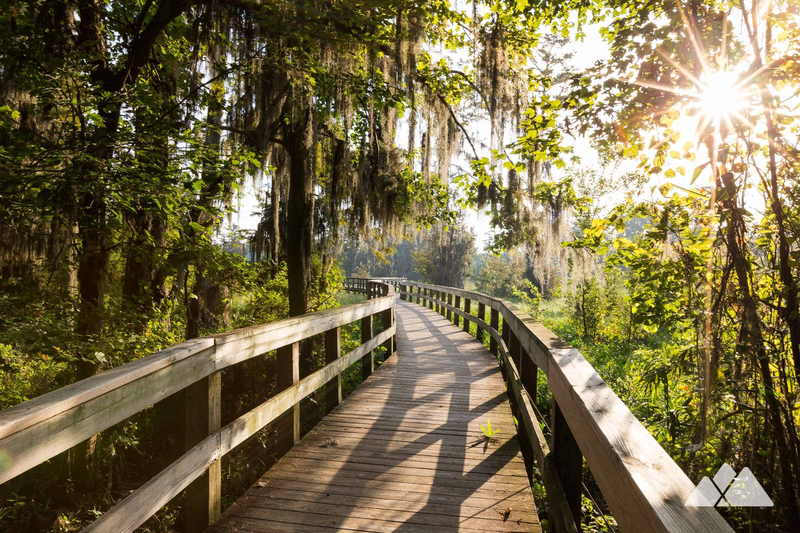
A 1,100-acre wetland nature park inside Augusta city limits. Boardwalk trails wind through swamp forest above the water, with viewing platforms positioned for birdwatching. The park sees 200+ bird species annually and is one of the better urban birdwatching spots in the Southeast — great blue herons, egrets, wood ducks, and migratory warblers in season.
Almost no one outside Augusta knows this place exists. It’s free, well-maintained, and serene on weekday mornings.
City Nature Escapes
Atlanta Botanical Garden
Fulton County · Atlanta (Midtown) · Paid admission
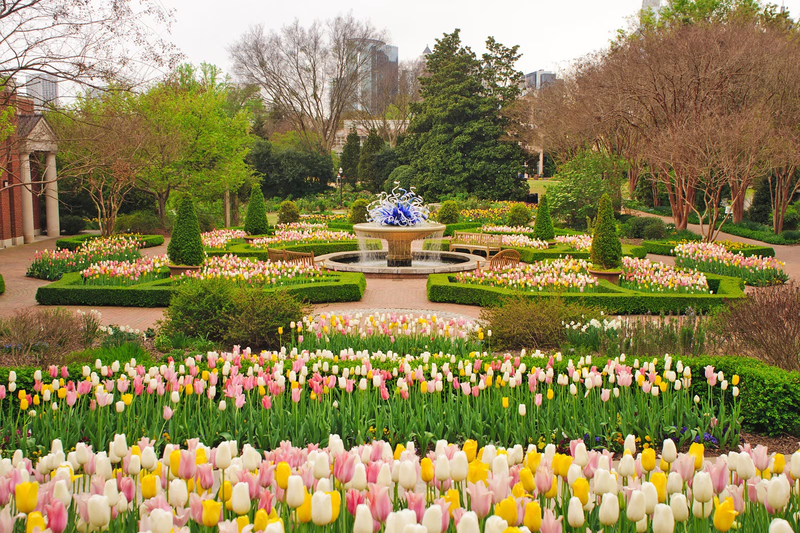
30 acres of cultivated gardens in the middle of Midtown Atlanta, adjacent to Piedmont Park. The garden hosts large-scale rotating exhibitions — including multiple Dale Chihuly glass sculpture installations — alongside permanent collections: a Japanese garden, rose garden, edible garden, and the Fuqua Orchid Center, which holds one of the largest orchid collections in North America.
It’s a paid attraction, but the quality is comparable to major botanical gardens anywhere in the country. The evening “Garden Lights” holiday experience (November–January) is one of Atlanta’s better seasonal draws.
Piedmont Park
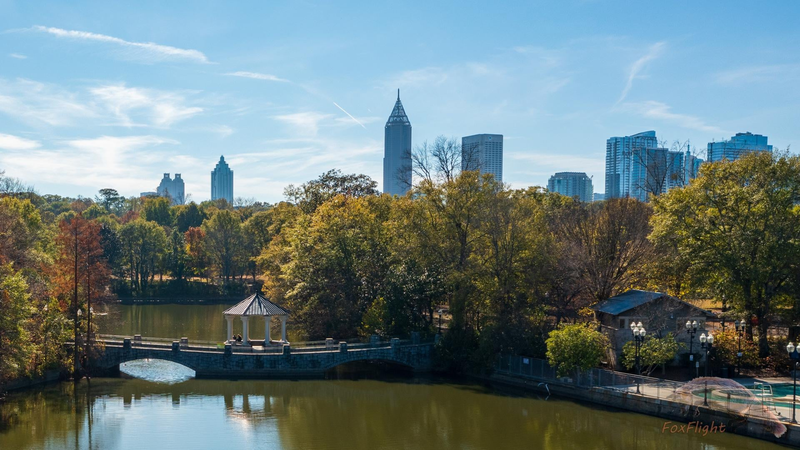
Fulton County · Atlanta · Free
Atlanta’s central park — 185 acres in the heart of Midtown. Piedmont borders the Atlanta Botanical Garden and the BeltLine trail system, making it the hub of the city’s outdoor activity. Lake views, skyline sight lines, and a weekend farmers market make it the city’s best single green space.
Visit to understand how Atlanta actually uses outdoor space. The park is well-maintained, heavily programmed with events, and reliably pleasant outside of peak summer heat.
Forsyth Park
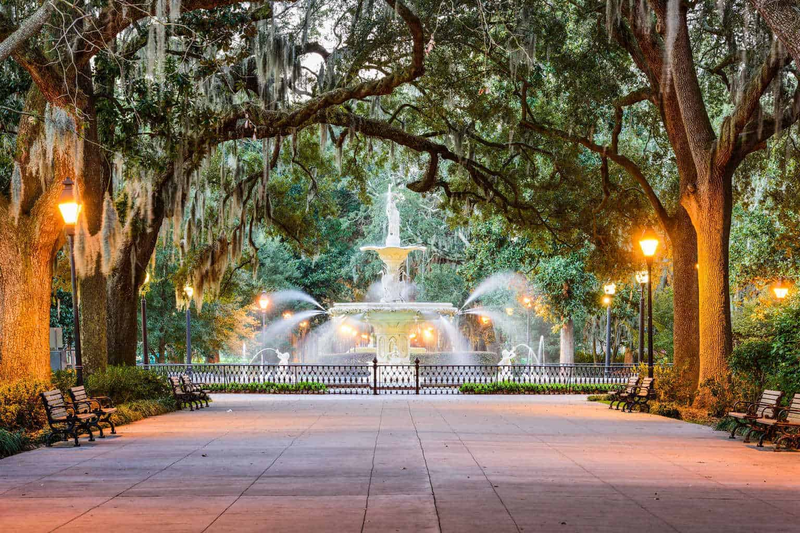
Chatham County · Savannah · Free
The anchor of Savannah’s park system — 30 acres with one of the most photographed fountains in the South, framed by Spanish-moss-draped live oaks. A farmers market runs at the south end on weekends. The park is surrounded by Savannah’s Victorian District, making a morning walk here followed by coffee at a nearby cafe as good as urban nature gets in the South.
Savannah’s 22 historic squares extend this green space through the whole city. Forsyth is the largest and most central — the right place to start.
Coastal & Southern Georgia
Driftwood Beach, Jekyll Island
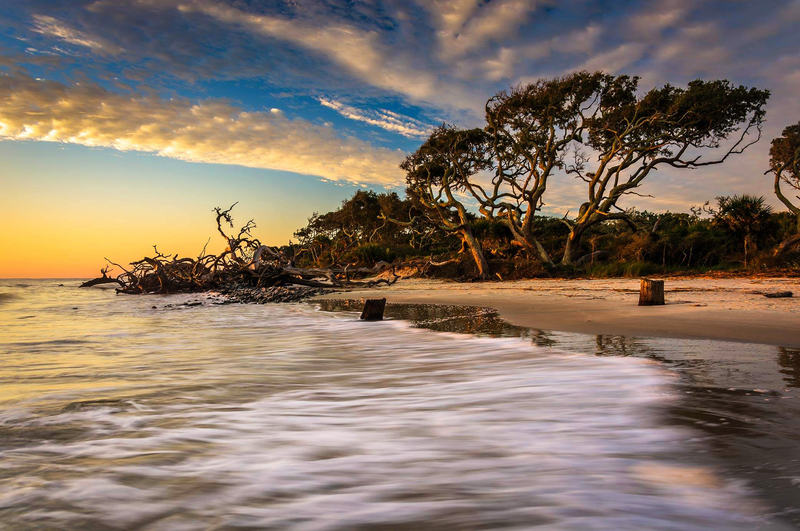
Glynn County · Jekyll Island · Vehicle entrance fee
A stretch of beach on Jekyll Island’s northeastern shore where coastal erosion has left hundreds of bleached driftwood trees standing in the tidal zone. The effect is otherworldly — skeletal tree forms rising from dark wet sand, with the Atlantic behind them. It’s one of the more photographed natural sights on the Georgia coast, and for good reason.
Jekyll Island is 65% protected green space by state law. Beyond Driftwood Beach, the island has active sea turtle nesting programs in summer, excellent estuary birding year-round, and a historic district with Gilded Age cottages. Best at sunrise or low tide for full beach access.
Thomasville Rose Garden
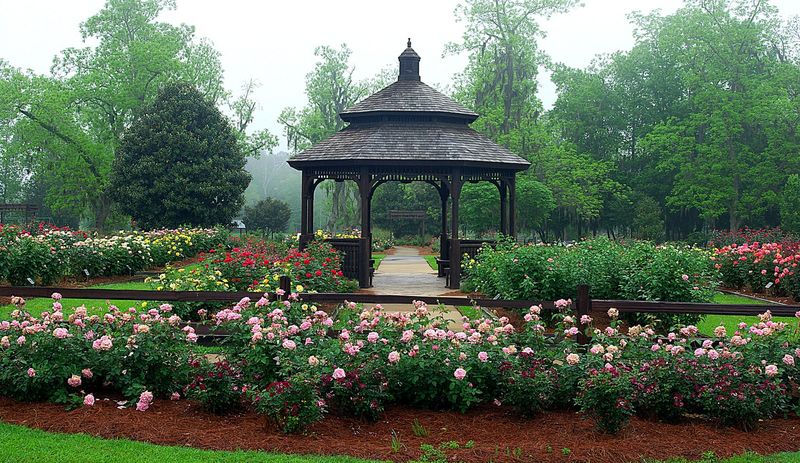
Thomas County · Thomasville · Free
A public rose garden maintained by the city of Thomasville — “the City of Roses” — with more than 1,000 varieties. The garden peaks late April through May and again in October, when the annual Rose Show draws visitors from across the region.
Thomasville sits in far south Georgia near the Florida border and gets overlooked by travelers heading to Florida’s coast. The town has one of the best-preserved Victorian-era commercial districts in the state, an active quail hunting culture, and excellent restaurants. The rose garden is a free, quiet anchor for a half-day stop.
Planning Notes
Best seasons: Spring (March–May) and fall (September–November) work across most of these spots. Waterfalls are strongest in late winter and early spring. Coastal spots are best in spring and fall. Summer is hot and humid statewide; the mountains run 10–15°F cooler than Atlanta.
Budget: Most state parks charge a small parking fee; trails are free to walk. A handful of spots on this list (Atlanta Botanical Garden, Callaway Gardens, Jekyll Island) charge admission or entrance fees — check their websites before you go. Everything else is free.
Driving: Georgia is a driving state. North Georgia to the coast is a 4-hour drive; plan trips around one region at a time. Most of these spots are within 90 minutes of Atlanta, Savannah, or Columbus.